

When wig brands evaluate a new supplier, most conversations naturally start with hair quality.
They ask questions like:
- Is the hair truly human hair?
- How does it feel after washing?
- Does it shed?
- How natural is the lace?
- How does the color perform over time?
These are all important questions.
However, after working with human hair wigs and helping brands develop their products, I have noticed one issue that is often overlooked:
The wig cap fit.
A wig can have beautiful hair, a natural lace front, and excellent craftsmanship, but if the cap size is not right, the final customer experience can still be disappointing.
I have seen situations where the problem was not the hair quality at all.
The hair was soft. The lace looked natural. The workmanship was good.
But the customer still felt:
"This wig does not feel like it was made for me."
In many cases, the reason was the fit.
That is why I always tell wig brands:
Do not evaluate only the hair. Evaluate how the entire wig fits and performs on a real person.
The Biggest Misunderstanding: A Tighter Wig Does Not Always Mean a Better Fit
One of the most common misunderstandings I see is:
"If the wig is tighter, it will stay more securely."
This sounds logical, but it is not always true.
A wig that is too tight may create:
- Pressure around the head
- Discomfort after several hours
- Headaches
- Reduced wearing time
For a customer who only wears a wig for a short event, this problem may not be obvious.
But for customers who wear wigs daily, comfort becomes one of the most important factors.
A premium wig should not make customers constantly think about the wig they are wearing.
The best fit is not the tightest fit.
The best fit is a balance between:
security, comfort, and natural movement.
Wig Cap Size Affects Natural Appearance More Than Many Brands Realize
Many people think cap size only affects whether the wig can be worn.
However, in my experience, cap size directly affects how natural the wig looks.
For example, when a wig cap is slightly too large:
- The lace may not sit close enough to the forehead
- The hairline may appear less realistic
- The crown area may look loose
- The wig may move during daily activities
The customer may not know the technical reason.
They may simply say:
"The wig does not look as natural as I expected."
On the other hand, when a wig cap is too small:
- The temple area may feel uncomfortable
- The ear area may not have enough coverage
- The wig may create unnecessary tension
- The customer may feel restricted while wearing it
This is why natural appearance is not created by the lace or hairline alone.
The cap must allow every part of the wig to sit in the correct position.

Adjustable Straps Are Helpful, But They Cannot Fix Everything
Many brands ask:
"Can adjustable straps solve different head sizes?"
The answer is: only partially.
Adjustable straps are useful for making small adjustments to tightness.
However, they cannot change the basic structure of the wig cap.
They cannot move:
- The lace top position
- The ear tab location
- The front-to-nape proportion
- The overall cap shape
This is an important point because some brands rely too much on adjustment features.
A good adjustment system improves fit.
But it cannot replace a properly designed sizing system.
Why Wig Brands Still Need Standard Sizes
A question I often receive is:
"Wouldn't a fully customized cap size be better for every customer?"
In theory, yes.
A completely customized wig made according to every customer's measurements sounds like the perfect solution.
However, from a production perspective, it also creates many challenges.
Every individual measurement creates:
- More production complexity
- Higher costs
- Longer lead times
- More opportunities for measurement errors
Especially for brands producing multiple units, managing every wig with a different size can create unnecessary risks.
This is why most successful wig brands still use standard sizing systems:
- Small
- Medium
- Large
The goal is not to eliminate standard sizing.
The goal is to create a sizing system that matches the brand's actual customers.
Do Not Simply Copy Your Supplier's Size Chart
This is something I often recommend to growing wig brands.
A supplier's standard size chart can be a good starting point.
But it may not always be the perfect solution for your brand.
Why?
Because suppliers usually develop their sizing based on:
- Previous production experience
- Existing customer groups
- Common market requests
However, your customers may have different characteristics.
For example:
A luxury wig brand targeting one specific market may need a different sizing strategy compared with a general fashion wig seller.
A medical wig brand may also have different priorities because comfort and long-term wear are much more important.
The best brands gradually build their own understanding of their customers.
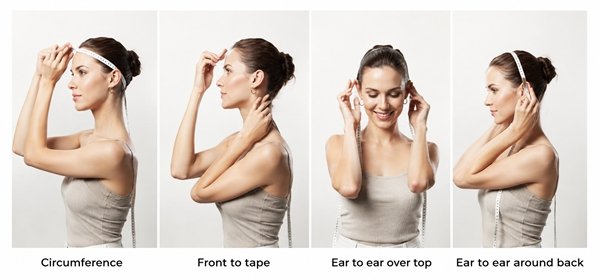
Which Measurements Matter When Developing a Wig Size Chart?
Many people only focus on head circumference.
However, in my experience, circumference alone does not tell the complete story.
Two customers can have the same circumference but completely different wearing experiences because their head shapes are different.
The three basic measurements I usually recommend are:
| Measurement | Why It Matters |
|---|---|
| Circumference | Understand overall head size |
| Front to Nape | Understand head length and cap depth |
| Ear to Ear Over Top | Understand top coverage and positioning |
These measurements help brands better understand what their customers actually need.
How Should Brands Test Wig Cap Fit Before Launching?
When brands receive samples from suppliers, they usually test:
- Hair softness
- Color
- Texture
- Lace quality
These are necessary.
But I believe one additional test is extremely important:
Real wearing experience.
A proper sample test should include:
- Wearing the wig for several hours
- Moving naturally
- Checking stability
- Tucking hair behind ears
- Checking the hairline under different lighting
- Evaluating comfort around temples and ears
A wig that looks perfect on a mannequin may perform differently on a real customer.
The final goal is not just a beautiful sample.
The goal is a wig that customers love wearing.
Why Cap Fit Matters Even More for Medical Wig Customers
For medical wig customers, cap fit becomes even more critical.
Many customers dealing with hair loss or medical conditions need wigs that provide:
- Comfort
- Security
- Natural appearance
- Long wearing ability
For them, a poor fit is not just a product inconvenience.
It can affect confidence and emotional comfort.
This is why medical wig development requires even more attention to cap construction and sizing.

Final Thoughts From a Wig Supplier
After years working with human hair wigs, I have learned one important lesson:
A great wig is not created by hair quality alone.
The best customer experience comes from the combination of:
- Quality human hair
- Natural hairline design
- Proper cap construction
- Correct sizing strategy
For wig brands, my advice is:
-
Evaluate the cap while evaluating the hair.
-
Remember that proper cap size is the foundation of natural appearance.
-
Develop your sizing strategy based on your customers, not only a supplier’s standard chart.
A better fitting wig does more than reduce complaints.
It helps customers feel confident, comfortable, and proud when they wear it.
If you are looking for a reliable human hair wig partner to develop products with the right balance of hair quality, cap construction, and fit, we would be happy to discuss your project.